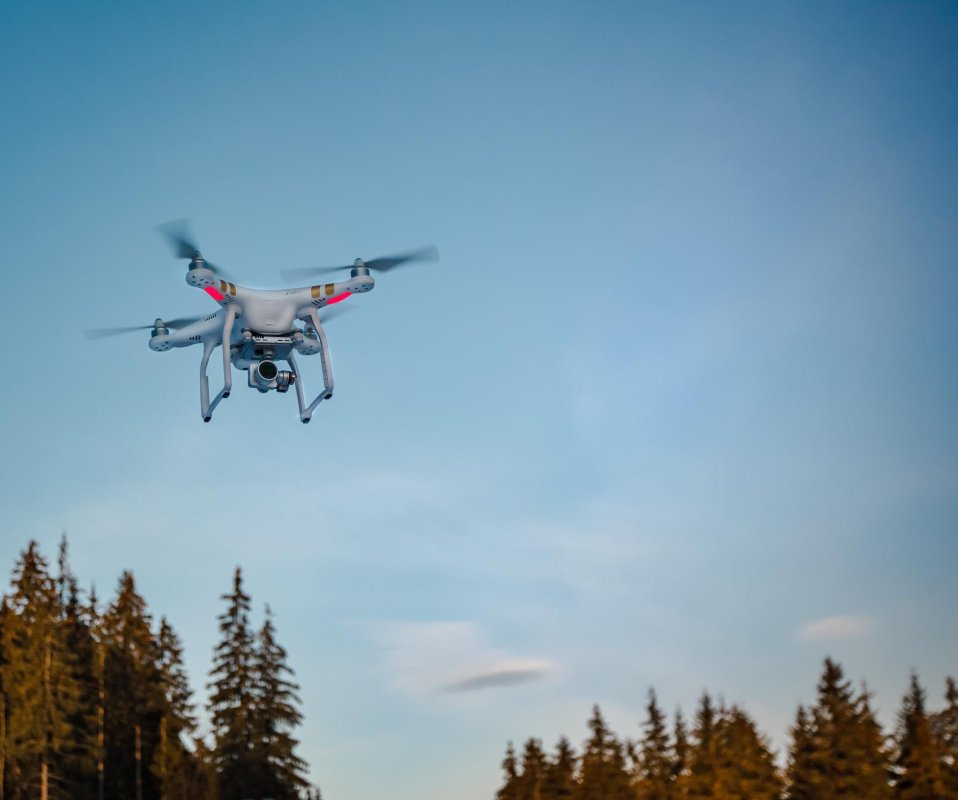
ISO 21384 Certification in Oman – UAS Requirements, CAA Compliance, Audit & Get Certification with SCS
https://scscertification.com/contactus.php
A commercial drone operation can look simple from the outside. A pilot prepares the aircraft, completes the flight and delivers the images, measurements or inspection data to the client.
The reality is usually more involved.
Once drone operations become a regular part of a business, the organization has to manage flight planning, personnel competence, aircraft condition, operational risks, records, emergency situations and regulatory requirements. When several pilots or project locations are involved, relying on individual experience becomes increasingly difficult.
This is where ISO 21384 certification in Oman can become relevant.
ISO 21384-3:2026 is the current edition of the international standard for operational procedures for commercial uncrewed aircraft systems (UAS). It applies to commercial UAS regardless of size, application or location and addresses the safe operation of commercial UAS, including the external safety-critical service providing the command and control link.
For an Omani organization, however, ISO certification is only one part of the picture. The Civil Aviation Authority (CAA) has its own regulatory requirements for unmanned aircraft. A company therefore needs to understand where ISO 21384 ends and Omani aviation regulation begins.
That distinction is central to preparing a credible UAS operation.
What Is ISO 21384 Certification in Oman?
ISO 21384 certification is an independent assessment of an organization's applicable commercial UAS operational arrangements against the requirements included within its agreed certification scope.
It is concerned with the way the operation is organized and controlled.
Consider an engineering company in Muscat that uses drones to inspect construction sites. The company may have modern aircraft and experienced pilots. That does not, by itself, demonstrate that its operation is consistently controlled.
Management still needs to know who approves flights, how operational risks are assessed, how aircraft readiness is confirmed, how pilot competence is maintained and what happens when a flight does not proceed as planned.
The same issue appears in an industrial inspection company in Sohar. A pilot may know how to fly the aircraft, but the organization also needs a reliable process around that individual.
ISO 21384 certification can provide a structured basis for assessing those arrangements.
The exact controls applicable to a business depend on its UAS activities, operating environment and certification scope. A small aerial photography company should not be expected to operate in exactly the same way as a contractor carrying out complex industrial inspections.
ISO 21384-3:2026: What Omani UAS Operators Need to Know
ISO 21384-3:2026 is the latest edition of ISO 21384 Part 3. ISO published the edition in August 2026 and withdrew the previous 2023 edition.
For companies that developed their procedures around an older edition, this creates a reason to review the existing system rather than simply continuing with the same documentation.
The current standard covers areas including safety and security, data protection, UAS operator responsibilities, documentation, insurance, airspace, registration, identification, flight operations, operational planning, flight preparation and in-flight operations.
That gives a useful indication of how broad the subject is. ISO 21384 is not simply a document about how a pilot controls an aircraft.
A company preparing for certification should therefore look at the complete operating process. A flight plan, for example, is only useful when it connects with the people responsible for the operation, the aircraft being used, the applicable airspace conditions and the controls applied before the aircraft takes off.
ISO 21384 Certification and Oman CAA Requirements
ISO 21384 certification should not be confused with permission to operate a drone in Oman.
The Oman Civil Aviation Authority maintains a regulatory framework specifically addressing unmanned aircraft. Its current regulations page lists Decision No. 1412/2023, which issued the Regulation Governing Unmanned Aircraft Systems (Drones), as well as CAR 102 for Remote Piloted Aircraft.
The CAA's regulatory framework exists to control aviation safety and lawful UAS operations in Oman.
ISO 21384 serves a different purpose.
A useful way to look at the relationship is this:
ISO 21384 certification assesses the organization's applicable commercial UAS operational system.
CAA requirements establish the regulatory conditions under which UAS activities can be conducted in Oman.
Aircraft registration, licences or operational approvals address specific regulatory obligations.
Client and project requirements may introduce additional conditions for a particular site or contract.
Meeting one of these requirements does not automatically demonstrate compliance with the others.
For an Omani company, the strongest approach is to map them separately and then connect them through the company's operational procedures.
What Does the Oman UAS Regulatory Framework Mean for Businesses?
Decision No. 1412/2023 issued Oman's Regulation Governing Unmanned Aircraft Systems and replaced the earlier regulation dealing with flying activities and aerial work using unmanned aircraft.
The CAA also maintains CAR 102, which addresses the operation of civilian unmanned aircraft in Oman and includes provisions relating to matters such as safe operation and remote-pilot responsibilities.
The practical lesson for a business is simple: an ISO procedure should not be written as though aviation regulation does not exist.
Suppose a company has a procedure requiring a project manager to approve every commercial drone mission. That procedure should also make clear where CAA-related checks fit into the process.
The person responsible for flight planning should know whether the operation requires a particular licence, approval, registration or other regulatory action. Those checks should happen before the aircraft is committed to the job, not after the flight has been scheduled with a client.
What Are the Main ISO 21384 Requirements for an Omani UAS Operation?
The requirements that matter to a particular company will depend on its scope, but several areas deserve close attention during preparation.
Operational planning
A commercial flight should have a defined purpose and a sensible plan.
The planning process may consider the location, aircraft, people involved, operating conditions, intended activity, foreseeable hazards and applicable regulatory requirements.
For a surveying company, the starting point may be the area that needs to be mapped and the quality of data required.
For an inspection contractor, the planning process may revolve around the asset being inspected, access limitations and the consequences of an interruption.
The important point is that planning should reflect the actual job.
Risk management
UAS risk cannot be assessed effectively from the office alone.
A flight over an isolated worksite has different characteristics from a flight around a busy construction project. An industrial inspection may have different hazards again.
A useful operational risk assessment should help the organization decide what controls are appropriate for the particular activity.
This is also where ISO and CAA requirements need to be considered together without being treated as the same thing.
Personnel competence
The person flying the drone is only one part of the operational team.
Depending on the company, responsibilities may also include mission planning, equipment management, maintenance, data processing, project supervision and incident investigation.
The organization should know what each role requires and have suitable evidence that the people assigned to those roles are competent.
A training certificate can be part of that evidence, but competence may also be demonstrated through practical assessment, experience, authorization records and refresher training.
Aircraft and equipment control
A commercial UAS should be managed as an operational asset.
The organization needs a sensible way of knowing which aircraft are available, whether they have been inspected or maintained as required, whether known defects have been addressed and whether the equipment is appropriate for the planned task.
This becomes especially important when a business owns several aircraft.
Imagine a company with projects in Muscat, Sohar and Duqm. If equipment status is maintained informally, a project team can easily make assumptions about an aircraft that are no longer correct.
A controlled equipment record avoids that problem.
Emergency and abnormal situations
A drone operation does not always follow the plan.
Weather may change. Communication may be interrupted. An aircraft may develop a technical problem. The operating environment may become unsuitable.
The organization needs procedures for foreseeable abnormal situations that make sense to the people who will actually use them.
The aim is not to create a thick manual full of scenarios that nobody remembers. The better approach is to establish clear actions for the situations that are realistic for the organization's operations.
Incident and near-miss reporting
A near miss can tell management something that a successful flight cannot.
If an aircraft unexpectedly loses communication during a routine inspection, recording the event is useful. Understanding why it happened is more useful. Deciding whether the procedure, equipment, training or planning method needs to change is better still.
That is where an operational system becomes a management tool rather than a collection of forms.
Oman CAA Drone Licensing and ISO 21384 Certification
The Oman CAA provides a service for obtaining a licence to operate drones. Its published service information refers to applicants such as government entities and companies and identifies information that can be required during the application process, including aircraft details, work coordinates and requested altitude.
Depending on the operation, coordination or no-objection requirements may also be relevant.
This should remain separate from ISO certification.
A company could have a well-designed ISO 21384 operational system and still need to satisfy the CAA before conducting a particular flight. Conversely, obtaining an aviation approval does not mean the company has been assessed and certified against ISO 21384.
For businesses, the sensible approach is to build an internal process that checks regulatory requirements during flight planning while using the ISO system to control the wider operation.
CAR 102 and Commercial Drone Operations in Oman
CAR 102 is the Oman Civil Aviation Regulation for Remote Piloted Aircraft.
It provides rules governing civilian UAS operations conducted within the Sultanate that affect or may affect the safety of air navigation.
For an organization preparing for ISO 21384 certification, CAR 102 should therefore be considered when identifying the legal and regulatory controls relevant to its operation.
This does not mean that every CAR 102 provision should simply be copied into an ISO procedure.
The two documents have different roles.
The CAA regulation establishes aviation requirements. ISO 21384 provides an international framework for commercial UAS operational procedures. A mature organization understands both and maintains a clear distinction between them.
Data Protection and Drone Imagery in Oman
Drone operations increasingly involve cameras, video and other forms of data collection.
That creates a privacy question whenever individuals can be identified from information collected during an operation.
Oman's Personal Data Protection Law was issued under Royal Decree 6/2022, and its Executive Regulation was issued under Ministerial Decision 34/2024.
There has also been a significant 2026 update. Royal Decree 68/2026 amended certain provisions of the Personal Data Protection Law, including provisions concerning its scope, exemptions, processing permits, consent and automated processing.
For a UAS operator, the practical question is not whether every drone image automatically becomes a privacy issue. The question is whether the organization's operation involves processing personal data and, if so, what controls are required.
A construction survey may capture workers. A resort marketing flight may capture guests. An infrastructure inspection may record people or vehicles.
The organization should understand what information it collects, why it is collected, who can access it, how long it is retained and how it is disclosed, where those requirements apply.
PDPL is a separate legal obligation. It should not be described as an ISO 21384 requirement.
What Should an ISO 21384 Audit in Oman Examine?
An audit should provide a picture of how the UAS system works in practice.
An auditor may review the organization's procedures and then look at operational evidence.
For example, a completed drone mission could be traced from initial planning through the flight and post-operation stage.
Was the activity within the certification scope? Were responsibilities clear? Was the aircraft suitable for the task? Were relevant checks completed? Were risks addressed? Were applicable regulatory requirements considered? Were records maintained?
If an incident occurred, was it reported and investigated?
This comparison between documented procedures and actual work is important.
A beautifully written procedure is not strong evidence if pilots routinely do something different.
ISO 21384 Internal Audit Checklist for Oman
An internal audit can identify weaknesses before the certification audit.
Rather than treating it as a document exercise, the organization can sample real UAS operations and ask:
-
Does the certification scope accurately describe the commercial UAS activities?
-
Are responsibilities clearly assigned?
-
Can the organization demonstrate personnel competence?
-
Are aircraft and supporting equipment controlled?
-
Are operational risks assessed?
-
Is flight planning consistently applied?
-
Are relevant CAA requirements identified?
-
Are applicable approvals or licences controlled?
-
Are emergency procedures understood?
-
Are incidents and near misses reviewed?
-
Are corrective actions completed?
-
Are operational records reliable and traceable?
-
Are privacy considerations addressed where applicable?
-
Does management review recurring UAS problems and operational performance?
The depth of the audit should reflect the organization's size and complexity.
There is little value in forcing a small aerial photography business to maintain the same level of control as a company operating several aircraft for industrial inspections across multiple locations.
ISO 21384 Certification in Muscat
Muscat is an obvious commercial market for UAS activities because of its concentration of construction, engineering, infrastructure, professional services and technology-related work.
A company may use drones for progress monitoring, surveying, inspection, mapping or commercial photography.
The challenge usually becomes greater as the business takes on more projects.
A pilot who works alone may remember every step. A company with several pilots and project managers cannot depend on individual memory.
For organizations seeking ISO 21384 certification in Muscat, the useful starting point is therefore the actual operating model: what work is performed, who performs it and how those activities are controlled.
ISO 21384 Certification in Salalah
Salalah has a different operating environment, with commercial activity connected to tourism, agriculture, construction, logistics and infrastructure.
A UAS operator working over larger areas may need to give more attention to communications, environmental conditions, equipment readiness and emergency arrangements.
Tourism-related aerial photography can introduce another consideration when people are captured in images.
For ISO 21384 certification in Salalah, the certification scope should reflect the services the company actually provides rather than simply describing the company as a drone operator.
ISO 21384 Certification in Sohar
Sohar has strong relevance for industrial, manufacturing, logistics and port-related UAS applications.
A company performing industrial inspections may work around active facilities, restricted areas and client-controlled sites.
Its operational procedures therefore need to work with the conditions of the site.
For an organization considering ISO 21384 certification in Sohar, site coordination, aircraft readiness, operational planning and incident response may deserve particular attention.
ISO 21384 Certification in Duqm
Duqm's expanding industrial and infrastructure environment provides potential applications for aerial surveying, construction monitoring, inspection and mapping.
Large projects can involve multiple contractors and teams spread across substantial areas.
That creates a practical need for consistency. Two teams should not be using completely different approaches to flight planning, equipment checks or operational records simply because they report to different project managers.
ISO 21384 preparation can help establish a common operating framework while retaining project-specific controls.
ISO 21384 Certification in Nizwa and Interior Oman
Commercial UAS activities in Nizwa and other parts of Interior Oman can include surveying, agriculture, construction, infrastructure and tourism-related work.
Operations outside major urban centres can expose practical weaknesses in communication and emergency arrangements.
A company should therefore consider its real operating environment when designing procedures.
A control that works perfectly for a routine Muscat project may need adjustment for a remote site where equipment, personnel and support services are less immediately available.
ISO 21384 Certification in Sur and Coastal Oman
Sur and other coastal locations can support tourism, construction, infrastructure and marine-related projects.
Environmental conditions may influence how operations are planned and when flights can safely proceed.
The geographical location itself is not the certification subject. The important point is that the organization's operating procedures should reflect the conditions in which its commercial UAS activities are actually performed.
Industries in Oman Where ISO 21384 Can Be Relevant
Oil and gas
UAS can support inspection, surveying and monitoring activities across energy operations.
A contractor working for an industrial client may have to coordinate its own UAS procedures with site rules, client requirements and applicable CAA controls.
ISO 21384 can provide a structured framework for the commercial operating side of that work.
Construction and engineering
Construction companies commonly use drones for progress documentation, surveying, inspection and site monitoring.
The management challenge grows when the company operates several projects.
A common operating procedure can help establish consistency without preventing project teams from applying site-specific controls.
Ports and logistics
Oman's logistics infrastructure provides opportunities for aerial inspection, mapping and monitoring.
Operations around active facilities require careful planning and coordination. The UAS procedure should reflect the actual working environment rather than treating the operation as ordinary aerial photography.
Mining and quarrying
Commercial UAS can support mapping, surveying, stockpile measurement and site monitoring.
Large or remote sites can make equipment reliability, communications and emergency arrangements particularly important.
Agriculture
Agricultural UAS applications can include mapping, monitoring and other commercial services.
The appropriate operational controls depend on the aircraft, mission, environment and applicable regulatory requirements.
Tourism and hospitality
Hotels, resorts and tourism companies may use drones for commercial imagery, property documentation and promotional content.
Where people are captured, privacy and personal-data considerations should be assessed alongside the aviation and operational requirements.
Utilities and infrastructure
UAS can be used for inspection and monitoring of infrastructure assets.
A structured operating system can help control flight planning, personnel responsibilities, equipment condition, records and incident management.
Surveying, GIS and mapping
Surveying companies are natural users of commercial UAS.
For these organizations, the quality of the final data depends partly on the quality of the operation that produced it. Equipment readiness, flight planning, operational records and competent personnel therefore matter alongside the technical surveying process.
Who Should Consider ISO 21384 Certification in Oman?
The standard can be relevant to organizations that conduct or manage commercial UAS activities within their certification scope.
This may include drone service providers, surveying companies, engineering organizations, construction contractors, industrial inspection companies, oil and gas contractors, mining businesses, infrastructure providers, agricultural technology companies, logistics organizations and commercial aerial photography businesses.
Certification tends to make more sense when UAS operations are a repeatable part of the business and clients, management or procurement teams need evidence that those activities are systematically controlled.
ISO 21384 and Oman Tender Requirements
Certification can sometimes support supplier qualification.
A client may ask a contractor to demonstrate recognized certification, competence or operational controls before awarding work.
That does not mean ISO 21384 certification automatically qualifies a company for every Omani tender.
Tender conditions vary between clients and projects. An energy contractor, construction company and government entity may ask for very different evidence.
If certification is being considered because of a particular tender, the actual procurement documents should be reviewed first.
That avoids spending time preparing for a certification that the tender does not actually require.
What Does ISO 21384 Certification Cost in Oman?
There is no universal certification price.
The cost can depend on the size of the organization, the number and complexity of UAS activities, locations, personnel, existing procedures and the certification scope.
A small aerial photography business in Muscat and a multi-location industrial inspection contractor will not necessarily require the same audit effort.
The most useful quotation is therefore one based on the organization's actual operating scope.
How Long Does ISO 21384 Certification Take in Oman?
There is also no single certification timeline that applies to every organization.
Preparation is generally easier when the company already has documented procedures, competent personnel, equipment records and evidence from established UAS operations.
Where those controls are informal, the organization may need more time to establish and test them.
A sensible preparation sequence is:
-
Define the certification scope.
-
Review actual UAS activities.
-
Compare existing controls with the applicable requirements.
-
Address identified gaps.
-
Implement the revised procedures.
-
Train relevant personnel.
-
Conduct an internal audit.
-
Correct findings.
-
Complete the certification audit.
-
Close applicable findings.
The goal should be a system that remains useful after the certificate has been issued.
How to Prepare for ISO 21384 Certification in Oman
Start with actual flights.
Review several recent UAS operations and follow the process from beginning to end.
How was the flight requested? Who approved it? What information was considered before the aircraft was deployed? Was the aircraft ready? Was the pilot competent for the task? Were applicable CAA requirements checked? What happened when the flight ended? Where were the records stored?
Those questions often reveal more than a review of the manual alone.
Once the gaps are understood, the organization can improve its procedures, train people and test whether the new controls work.
An internal audit then provides an opportunity to identify remaining weaknesses before the certification audit.
ISO 21384 Certification With SCS in Oman
SCS can support organizations seeking ISO 21384 certification in Oman by helping define the certification scope, assess operational readiness and prepare for the certification process.
The scope should be based on the company's actual UAS activities.
A surveying company in Muscat may have different priorities from an industrial inspection contractor in Sohar. A construction company operating across Duqm may face different operational challenges from a tourism business in Salalah.
A useful certification process should recognize those differences rather than applying one generic procedure to every organization.
Why a Structured UAS System Matters After Certification
The real test of a UAS operating system comes after the audit.
A new pilot should be able to understand how the company works without relying entirely on informal instructions from another pilot.
When another aircraft is purchased, the company should know how it enters the operational fleet.
When an incident occurs, people should know how to report it and what happens next.
When a new client introduces additional requirements, management should have a process for evaluating those requirements rather than changing procedures informally.
That is where ISO 21384 can become useful beyond the certificate itself.
ISO 21384 Certification vs CAA Approval in Oman
These terms should remain separate.
ISO 21384 certification concerns conformity of applicable commercial UAS operational procedures with the ISO standard.
CAA licensing and approvals concern the legal and aviation requirements for operating drones in Oman.
Registration and other regulatory processes address specific obligations applicable to aircraft or operations.
Client and project permissions can add further conditions for a particular site.
An organization preparing for certification should maintain a clear compliance map showing where each obligation comes from.
That makes it easier for management, pilots and auditors to understand which controls are part of the ISO system and which are imposed by Omani law, the CAA or a client.
Get ISO 21384 Certified in Oman With SCS
If your organization uses commercial drones for surveying, construction, inspection, oil and gas, infrastructure, logistics, mining, agriculture, tourism or other professional activities, ISO 21384 certification can provide a structured way to manage those operations.
The right starting point is not a generic checklist. It is an honest review of what the company actually does, how its UAS activities are controlled and where the gaps are.
SCS can support organizations in Oman with the certification process based on their defined commercial UAS scope.
Get in touch with SCS to discuss your ISO 21384 certification requirements in Oman.
Need ISO Certification for Your Business?
Speak with our certification specialists to understand certification requirements, audit process, implementation timelines and accredited certification services.